Railings & handrails
Railings and handrails, built to fit the actual opening.
Interior stair rails, exterior guard rails, balcony systems — measured on site and welded to fit, not trimmed from a stock size.
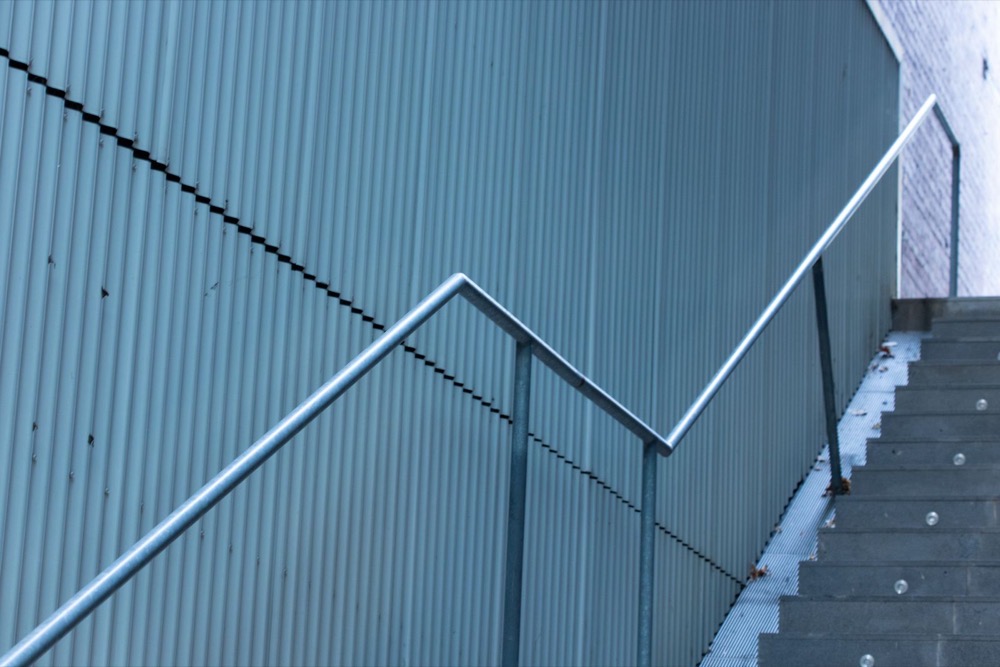
- Materials
- Steel, iron, aluminumPicked for where it goes.
- Estimate
- FreeText a photo of the opening.
- Install
- On siteWe come to you for anything structural.
- Coverage
- Serving the East BayHayward and the East Bay.
What we build
Interior stair and loft railings, exterior guard rails on stairs, decks and balconies, and handrails for anywhere someone needs something solid to hold onto — a code requirement in a lot of cases, not just a nice-to-have. Every railing is measured on site before anything gets cut, because openings on real buildings are rarely the exact width a stock kit assumes.
Style ranges from a plain, functional handrail to a decorative pattern with scrollwork or a custom baluster design. We can work from a photo of something you like, a sketch, or a description of what the space needs.
Materials and finish
Mild steel is the default for most jobs — strong, weldable, and takes paint or powder coat well. For anything exposed to weather, that finish matters as much as the metal: a primed and painted or powder-coated rail holds up for years, while bare steel left unfinished will rust. Aluminum is the better call on a balcony that gets direct salt air or constant sun, since it skips the corrosion question entirely. We’ll recommend a finish based on where the railing actually lives, not sell you the same answer for every job.
Building code, stated plainly
Guard rails on stairs, balconies and elevated walking surfaces are usually governed by the building code your city has adopted — commonly a 36”–42” height requirement and baluster spacing that stops a 4” sphere from passing through, though the exact numbers depend on the code cycle and jurisdiction. We build to what applies to your job. For anything that needs a permit, confirm the specifics with your city’s building department before work starts — we can point you to what to ask, but the department has the final word.
Interior vs. exterior
Interior rails are usually the simpler job — no weather to design around, more freedom on finish and material. Exterior and balcony rails have to survive rain, sun and temperature swings without the welds or the mounting points failing years down the line, which is where finish and attachment method matter more than they look like they should. If a balcony rail is being replaced because the old one is failing, we’ll look at why before repeating the same mistake in the new one.
How the estimate works
Text a photo of the opening or the existing railing, or call and describe it. For most jobs we can give a real range over the phone and confirm the exact price after seeing the site in person — measurements for anything structural happen on site, not from a photo alone.
Railings & handrails
What people ask before booking.
What are railings usually made from?
Mild steel is the most common choice — it welds cleanly, holds up outdoors with the right coating, and costs less than the alternatives. Wrought iron is used for a more traditional, decorative look. Aluminum comes up for exterior railings where rust is a bigger concern than strength margin, since it won’t corrode the way untreated steel will.
Which one makes sense depends on where the railing goes and what it needs to survive — salt air near the water, direct sun, foot traffic. We’ll say which fits before you commit to one.
Do railings need to meet a building code?
Usually yes, if it’s a guard rail on a stair, balcony or elevated walking surface — height, baluster spacing and load requirements are set by the building code your city has adopted, and they exist because a railing that looks fine can still fail the way that actually matters. We build to the code that applies to the job and can tell you what that means for your specific installation, but exact requirements vary by jurisdiction and by whether the work needs a permit, so confirm the specifics with your city’s building department for anything structural.
Can you match an existing railing style?
Often, yes — send a photo of the section you have and we’ll tell you whether it can be matched or extended, or whether the original was a manufactured part that is no longer available and needs a close equivalent instead. Matching an exact powder-coat color is easier than matching an intricate pattern; we’ll be upfront about which one your railing is.
How long does a railing job take?
A straightforward interior handrail can be measured, built and installed inside a week. A full exterior balcony system with a custom pattern takes longer, mostly for fabrication time in the shop. We give a real timeline with the estimate, not a placeholder.
Send a photo of the opening.
We'll tell you what it takes to build a railing that fits it properly — material, finish and a real price.
Licensed, bonded and insured — CSLB #1037852. Free estimates, no obligation.
Based in Hayward. Serving the East Bay. Not sure if it's something we do? See the full list of services.